Featured

genomic vaccines

So, we’ve seen how important immunizations are to society, as well as the current impact of genomic sequencing in the clinic. But is there a connection between these two topics?

Here is where the field of vaccine genomics comes into play. Genome sequencing, such as Whole-Exome Sequencing that we discussed in the last post, can help identify genetic patterns in a person’s DNA code. Some of these patterns can provide clues into the strength of an individual’s immune system in protecting against certain diseases, or factors that can impact immunity or the success of a immunization’s response (National Research Council 2006). This information could allow scientists to create personalized vaccines with specific targets, that can allow for higher success rates (National Research Council 2006).

In addition to this personalizing vaccines, we can sequence viruses themselves. By comparing genome sequences of viruses that cause infection against ones that do not, we can begin to understand the strain itself (National Research Council 2006). It can also allow us to understand how the virus gets to the strengths that it does, environments that it can thrive in, and allow researchers and scientists to be able to develop faster and more effective vaccines (National Research Council 2006).

But researchers aren’t just using genomics to understand vaccines; they’ve begun using it to cure them. Genomic vaccines are sequences of DNA or RNA that are injected into research subjects, and have been coded to enter cells and produce proteins that can produce antibodies that can help fight viruses (Ling 2017). This acts as support to our own immune systems, which learn how to make those same antibodies at a much slower rate. This is a research topic currently being studied not only in academic labs across the United States, but also in pharmaceutical companies across the Research Triangle and North Carolina. 
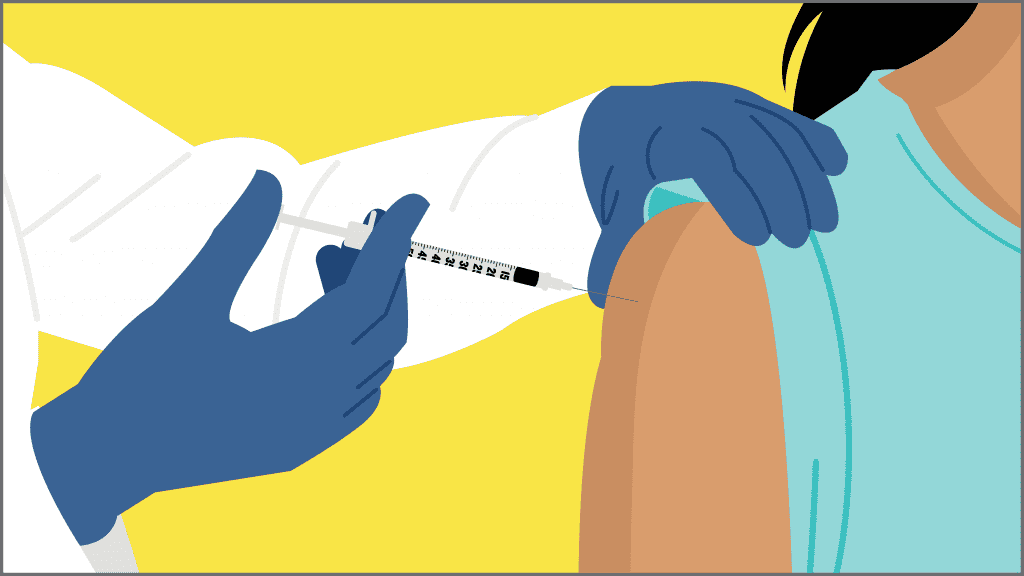
Figure 1. Illustration of Vaccine Injection
Credit: GoodRx (https://www.goodrx.com/blog/travel-vaccines-general-info/)

While this may seem like science fiction, there are a number of clinical trials underway implementing genomic vaccines for conditions such as influenza, Ebola, Hepatitis C, HIV, and breast, lung, prostate, pancreatic and other cancers (Ling 2017). While clinical trials are infamous for being large time commitments, it’s something to definitely keep an eye out for as we delve deeper into the time period that many scientists are deeming the “Genomic Revolution”, especially for patients with special conditions like Evelyn and Jack.

References

Ling G. 2017. “Genomic Vaccines Fight Disease in Ways Not Possible Before.” Scientific American. [accessed 2020 Feb 19]. https://www.scientificamerican.com/article/genomic-vaccines/

National Research Council. 2006. The Genomic Revolution: Implications for Treatment and Control of Infectious Disease: Working Group Summaries. Washington, DC: The National Academies Press. https://doi.org/10.17226/11615.

Surofchy D. Travel Vaccines: When to Get Them, Side Effects, and Cost – GoodRx. The GoodRx Prescription Savings Blog. 2019 Nov 13 [accessed 2020 Feb 22]. https://www.goodrx.com/blog/travel-vaccines-general-info/
personalized genomics in the clinic

Patient Notes: 2/18/2020

Evelyn Carter, 7 y.o female, No Diagnosis – Emergency Appt

  • Red marking on forehead and behind ears, cleft lip and wide-set eyes. Difficulty speaking and with basic language comprehension and development.
  • Unknown diagnosis- potential genetic factor?
  • Prescription: Whole-Exome Sequencing, Microarray 

For the longest time, patients like Evelyn were treated by physicians based on the doctor’s previous experience alone. Individuals were grouped together based on their phenotype, or physical symptoms, and then treated with what was known to work in patients that came before them. However, with the racing modern advancements in genomics, it’s become possible to understand what makes Evelyn tick, and what exactly causes her delayed learning and difficulty speaking. What is that thing, you may ask? The answer lies in her genetic code.

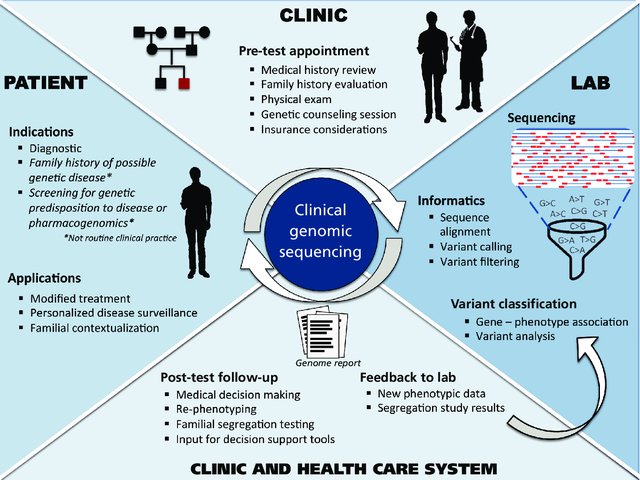
Whole-exome sequencing (WES) is a novel technique of DNA sequencing that focuses on identifying portions of the genome that code for proteins. It occurs in numerous steps: breaking the genome apart, using target-enrichment strategies to identify exons (the coding regions), separating them from non-coding regions, and then sequencing the exons to interpret results (Frey 2016, par. 5) . WES is used mainly for its efficiency, low cost, and usefulness in studying rare conditions (Frey 2016, par. 7-9). In terms of applications, WES has been used in a variety of settings since the earliest discoveries of disease-causing mutations in 2009, including research and clinical diagnosis (Frey 2016, par. 13).  By sequencing exomes, physicians are able to identify exactly what sets Evelyn apart from her unaffected classmates, and can point to potential conditions that she may have. It is truly a translational process that requires not only physicians, but patient consent, analysts and a support system of medical professionals, as outlined in Figure 1.

Figure 1. A schematic of clinical genomic sequencing implementation in the clinical system.
Credit: Krier, et.al

The NCGENES project is a clinical trial in Chapel Hill that is using WES to analyze around 750 children and adults with genetic disorders but has not been properly diagnosed, like Evelyn (Foreman 2013, par. 5). By studying patients with a wide variety of ailments, such as cancer, cardiogenetic diseases, and neurodevelopmental disorders, the NCGENES project attempts to identify significant portions of the genome that may be causing the disease or condition (Foreman 2013, par. 5). This project is hoped to allow physicians to assess the accuracy at which WES can be utilized, and in which cases and patient groups it will be most effective. Much of the current clinical research, including the groundbreaking project at UNC, is focusing on how to effectively use clinical sequencing to improve health care outcomes of patients, and whether or not it can be used productively in preventative health.

Unfortunately, with the advancement in clinical genomics comes an abundance of questions. For example, deciding what information should be communicated from the sequencing to patients, or who has the expertise to translate findings, and potentially ethical, legal and social implications (Berberich et al. 2018, p. 2). Although the ethics of genomic sequencing in the clinic have yet to be seriously assessed, it is no secret that the technology has a multitude of potential applications, as exemplified in projects being executed in North Carolina. This can be used as a progressive tool for healthcare professionals in order to offer personalized treatment plans for patients, as well as create diagnoses for patients like Evelyn.

References

Berberich AJ., Hegele R. 2018. “Whole genome sequencing in the clinic: empowerment or too much information?” CMAJ: Canadian Medical Association Journal, p. E124+. [accessed 2020 Jan 25]. https://www.ncbi.nlm.nih.gov/pmc/articles/PMC5798981/

Biesecker L, Burke W Kohane I, Plon SE, Zimmern R. 2012. “Next-generation sequencing in the clinic: are we ready?” Nature Reviews Genetics, vol. 13, no. 11, p. 818+. [accessed 2020 Jan 25]. https://www.ncbi.nlm.nih.gov/pmc/articles/PMC3891793/

Foreman AK, Lee K, Evans JP. 2013. The NCGENES Project: Exploring the New World of Genome Sequencing. North Carolina Medical Journal. [accessed 2020 Jan 25];74(6):500-4. http://classic.ncmedicaljournal.com/archives/?74610

Frey RJ. 2016. “Exome Sequencing.” The Gale Encyclopedia of Genetic Disorders, edited by Tracie Moy and Laura Avery, 4th ed., vol. 1, Gale, pp. 650-655. Gale In Context: Science, [accessed 2020 Jan 25]. https://link.gale.com/apps/doc/CX3630400182/SCIC?u=ncliveuncch&sid=SCIC&xid=bc4a7b4dRehm HL. 2017. “Evolving health care through personal genomics.” Nature Reviews Genetics, vol. 18, no. 4, p. 259+. [accessed 2020 Jan 25]. https://www.nature.com/articles/nrg.2016.162?proof=true

Krier J, Kalia S & Green R. 2016. “Genomic sequencing in clinical practice: Applications, challenges, and opportunities.” Dialogues in Clinical Neuroscience. 18. 299-312. 

Rehm HL. 2017. “Evolving health care through personal genomics.” Nature Reviews Genetics, vol. 18, no. 4, p. 259+. [accessed 2020 Jan 25]. https://www.nature.com/articles/nrg.2016.162?proof=true

immunization legislation in north carolina

Patient Notes: 2/18/2020

Jack Wilson, 9 y.o male, Guillan-Barre Syndrome Diagnosis – Yearly Checkup

  • Shortness of breath, reported tingling in legs
  • Prescription: Immunoglobulin therapy, check on multivitamin use at home

Guillan-Barre Syndrome is a life-threatening disease that causes the body’s immune system to attack its own nerves, which means that patients suffer from paralysis and chronic pain (Guillain-Barré Syndrome). As a result, individuals who have the condition are unable to get immunizations at the risk of potentially making the condition worse (Guillain-Barré Syndrome). Vaccines can cause severe side effects in patients with Guillan-Barre syndrome, and they rely on the people around them to get their vaccines so they can be protected from illnesses like the common cold, measles and mumps. However, it’s becoming more popular, due to vaccination misinformation, to get out of receiving those immunizations that can be vital protection for people like Jack.

In North Carolina, individuals can get around the current vaccination laws by either claiming a medical or religious exemption. In the case of a religious exemption in the state, parents currently only have to supply the name and date of birth of the child to be exempted, with no other documentation (Knight 2004). 

Some statistics that might make you do a double-take:

  • 1 in every 300 students were able to claim religious exemption in the last year, and why 80 of the state’s 100 counties had an increase in those claims since 2011 (Editorial Board 2019).  You can directly view this increase in Figure 1 below.
  • Jared Brumbaugh (2019) notes that North Carolina hadn’t had a measles case since 2012, but in the last year, it had three, which was considered an outbreak. 
  • Grayson Mendenhall (2016) discusses that vaccine-preventable diseases among adults cost the U.S economy $8.95 billion in 2015, with unvaccinated individuals responsible for 80% of that figure. 
Figure 1. The increase of religious exemption claims in the last decade. (Across NC)
CREDIT N.C. DEPARTMENT OF HEALTH AND HUMAN SERVICES / JASON DEBRUYN

Many anti-vaccination individuals will argue that it is within their own rights to decide whether or not to receive immunizations, as it is a matter of physical autonomy. However, when their actions can infringe on the safety of the general public, it can be dangerous to not only themselves, but people like Jack. It’s a problem that needs to be fixed by the North Carolina legislature, and fast. 

So what can you do to help? First, you can do your part by making sure that you are up to date on all your immunizations, and getting this year’s flu shot at your local pharmacy or doctor’s office. From there, you can write to local legislation urging them to make a change to the current religious exemption clause in North Carolina law, and to ensure that legislators keep public safety a main concern, especially over individual beliefs based on misinformation.

References

Across NC, More Parents Are Using Religious Exemption To Avoid Vaccinating Children. 88.5 WFDD. 2019 Aug 16 [accessed 2020 Feb 22]. https://www.wfdd.org/story/across-nc-more-parents-are-using-religious-exemption-avoid-vaccinating-children

Brumbaugh J. 2019 Jun 5. ENC Health Currents: Is NC Prepared For Measles Outbreak? Public Radio East. [accessed 2020 Jan 31]. https://www.publicradioeast.org/post/enc-health-currents-nc-prepared-measles-outbreak

Guillain-Barré Syndrome. Centers for Disease Control and Prevention. 2019 Dec 20 [accessed 2020 Feb 22]. https://www.cdc.gov/campylobacter/guillain-barre.html

Knight AL. 2004. Religious Exemptions to North Carolina’s Childhood Immunization Requirements. School Law Bulletin. [accessed 2020 Jan 31];25(4):12–19.

Editorial Board. 2019 Aug 16. Lawmakers are afraid to take on anti-vaxxers. Now NC has a bigger problem. Charlotte Observer. [accessed 2020 Jan 31]. https://www.charlotteobserver.com/opinion/article234071442.html

Mendenhall G. 2016 Oct 12. Unvaccinated Adults Cost the U.S. More than $7 Billion a Year. [accessed 2020 Feb 6]. https://pharmacy.unc.edu/2016/10/unvaccinated-adults-cost-u-s-7-billion-year/

Sanyaolu A, Okorie C, Marinkovic A, Ayodele O, Abbasi AF, Prakash S, Gosse J, Younis S, Mangat J, Chan H. Measles Outbreak in Unvaccinated and Partially Vaccinated Children and Adults in the United States and Canada (2018-2019): A Narrative Review of Cases. The Journal of Health Care Organization, Provision and Financing. 2019 [accessed 2020 Jan 31];56:1–10. doi:10.1177/0046958019894098.

Create your own website, free on WordPress.com.Create your own website.
Start free